
Let’s Talk About Your Idea.

I would like to discuss:(Required)
or email us at info@wowbrands.com
Discover your wow factor. Work With Us

Tuesday February 11, 2025

Covid and Consumer Behavior

How COVID-19 Changed Retail Buying Patterns

What happens in retail is largely a byproduct of the overall economy, consumer behavior, and consumer discretionary income—that is, how much “free money” a person has. Regardless of a consumer’s desire to buy, if they lack the financial resources (due to unemployment, reduced credit, etc.), spending will naturally decline. Conversely, consumers with robust bank accounts have a greater capacity to spend.

COVID-19 was a formative event in our collective history—comparable in impact to moments like the JFK assassination or the moon landing. The experience of the pandemic is indelibly etched in our memories, and its effects on consumer behavior are still being unraveled.

Observing the Change

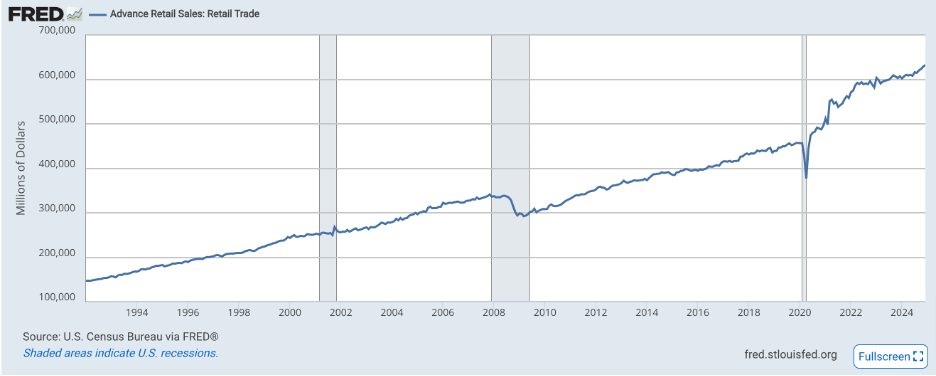
Each month, the government releases data on “Retail Sales,” which measures the total money spent in retail across the U.S. While retail sales have generally trended upward over the years, there was a significant dip during the COVID-19 lockdowns. When economies shut down and people were required to stay home for several months, consumer behavior had to adapt rapidly.
With physical stores closed or operating under strict social distancing guidelines, consumers were left with two main options:

  1. Shop in-person for the categories that remained open.
  2. Switch to online shopping.

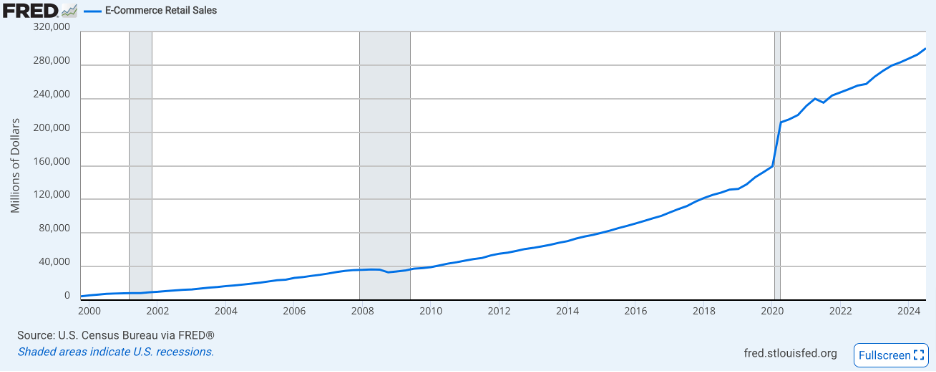
The overwhelming trend was a migration to online purchases. For example, estimates suggest that U.S. e-commerce sales grew significantly during this period—figures from various sources indicate that online sales increased by as much as 80% or more over a few short years. (Note: While one figure mentioned a growth from approximately $160 billion to $300 billion, actual numbers vary by source, but the overall trend is clear: the shift to online was dramatic.)

The Acceleration of Existing Trends

Many argue that COVID-19 did not so much create new consumer behaviors as it accelerated changes that were already underway. E-commerce had been steadily growing, but the pandemic condensed what might have been a decade’s worth of change into just a few months. In particular, it forced older demographics—traditionally more reliant on brick-and-mortar shopping—to embrace digital purchasing, aligning their behavior more closely with that of younger, digitally native consumers.

Generational Purchasing Patterns

Baby Boomers (Born 1946–1964):
Historically, Baby Boomers have preferred the traditional in-store shopping experience, valuing personal interaction, tactile product examination, and customer service. However, as COVID-19 led to store closures and heightened health concerns, this cohort experienced a notable uptick in online grocery orders, prescription refills, and other essential purchases (Kim & Forsythe, 2008; Verhoef, Kannan, & Inman, 2015; Pantano et al., 2020; Donthu & Gustafsson, 2020).

Generation X (Born 1965–1980):
Often seen as a transitional group, Generation X is comfortable with both online and offline shopping channels. They appreciate the convenience of digital options while still valuing in-person experiences for more complex or high-involvement purchases. In response to the pandemic, many retailers enhanced their digital services (e.g., click-and-collect and curbside pickup) alongside rigorous in-store safety protocols, thus bridging the gap between digital adoption and traditional shopping (Verhoef et al., 2015; Sheth, 2020).

Millennials (Born ~1981–1996) and Generation Z (Born ~1997 Onward):
As digital natives, Millennials and Generation Z have always been comfortable with using mobile devices, social media, and online platforms for shopping. Their behaviors—favoring speed, convenience, and seamless integration between digital and physical retail—were already well established before COVID-19. The pandemic reinforced their expectations, with these consumers demanding enhanced contactless payment options, real-time inventory checks, and smooth transitions between online and offline shopping experiences (Fromm & Garton, 2013; Kim & Forsythe, 2008; Sheth, 2020).

Conclusion

The abrupt disruption of traditional retail channels forced even reluctant consumers to overcome their technological hesitations. This “forced experiment” expanded digital literacy among older consumers and raised overall expectations for digital convenience. In response, retailers rapidly invested in digital infrastructure and omnichannel strategies—integrating enhanced safety measures in physical stores with improved online offerings—to create a more unified shopping experience.

As a retailer, meeting consumers where they are is essential. Adapting your business model to fit the new consumer expectations—particularly by strengthening your digital infrastructure—is no longer optional. The shopping landscape has irrevocably changed, and businesses must evolve to remain relevant in a world where the blend of online and offline experiences is now the norm.

References

  • Donthu, N., & Gustafsson, A. (2020). Effects of COVID-19 on business and research. Journal of Business Research, 117, 284–289.
  • Fromm, J., & Garton, C. (2013). Marketing to Millennials: Reach the largest and most influential generation of consumers ever. AMACOM.
  • Kim, J., & Forsythe, S. (2008). Adoption of online shopping: An application of diffusion of innovation theory. Journal of Retailing and Consumer Services, 15(2), 97–110.
  • Pantano, E., Pizzi, G., Scarpi, D., & Dennis, C. (2020). Competing during a pandemic? Retailers' ups and downs during the COVID-19 outbreak. Journal of Business Research, 116, 209–213.
  • Sheth, J. (2020). Impact of COVID-19 on consumer behavior: Will the old habits return or die? Journal of Business Research, 117, 280–283.
  • Verhoef, P. C., Kannan, P. K., & Inman, J. J. (2015). From multi‐channel retailing to omni‐channel retailing: Introduction to the special issue on multi‐channel retailing. Journal of Retailing, 93(2), 174–181.

Monday January 27, 2025

Rent To Own 2024 Industry Recap

Rent To Own 2024 Industry Recap

At WOW Brands, we take a different approach: we believe macroeconomics and analyzing consumer behavior are precursors to effective marketing. It’s our job as a marketing agency to ensure you have the right media mix to succeed in tomorrow’s environment. When we review the Rent-to-Own (RTO) industry’s performance, we like to start wide and then narrow the focus. Please note that much of the Q4 data is still preliminary at the time of writing.

Retail Sector Overview

Overall, the retail industry experienced its 14th consecutive year of growth in 2024, albeit at a slower rate of around 2.5%–3.5%. However, within that broad retail landscape, the picture was more nuanced:

  • Home Furnishing Stores: Down an estimated 3.5%
  • E-commerce–Only Retailers: Up 8.9%

These mixed results highlight ongoing shifts in consumer buying patterns and underscore the need for RTO providers to adapt to evolving market conditions.

Key Developments in the RTO Industry

  1. IQVentures Acquired Aaron’s
    IQVentures took Aaron’s private. Known for solid operations, IQVentures is expected to leverage its expertise to refine Aaron’s strategy. Early indicators suggest potential moves toward expanded omnichannel and e-commerce initiatives.
  2. Buddy’s Parent Company, Franchise Group, Inc. (FRG), Filed for Bankruptcy
    This development creates uncertainty around Buddy’s operational future and could signal further consolidation or restructuring within the RTO segment.

Painting the Industry Picture: Major Players

We have several data points to help us understand trends in the RTO sector. Below is a snapshot comparing sales, year-over-year changes, e-commerce performance, and store counts for key industry players.

Company Total Sales YoY Change E-Commerce Sales Growth Store Count
Aaron’s $1,014M (6 months) –6.4% +20.8% –30 to –40
Upbound (RAC) $1,069M (9 months) +9.2% +26% –114
Flex Shopper $104M (9 months) +19.9% +19.9% N/A

Notable Earnings Callouts

  • Aaron’s
    • E-Commerce Growth: E-commerce recurring revenue increased 60.0% in Q4 2023 and 79.4% in Q2 2024, credited to a robust omnichannel customer acquisition program.
    • Lease Portfolio: Decreased 7.0% in 2023, then ended Q2 2024 down 2.0% YoY. However, same-store lease portfolio size ended Q2 up 1.6% YoY.
    • Acquisition: Acquired by IQVentures Holdings, LLC.
  • Upbound (Rent-A-Center & Acima)
    • Acima Segment: Revenues increased 18%, driven by higher rentals, fees, and merchandise sales.
    • Rent-A-Center Segment: Revenues up 1%, with a 1.6% increase in same-store sales.
    • Strategic Focus: Enhancing omni-channel experiences, leveraging data analytics, upgrading technology, and expanding product offerings.
    • E-Commerce Emphasis: “We believe e-commerce solutions are an important part of our lease-to-own offering.”
  • Flex Shopper
    • Lease Funding Approvals: Increased 53.1%.
    • Revenues: Up 20.3%.
    • Gross Profit: Grew 44.6%.
    • Profitability: For the nine months ended September 30, 2024, net income was $549k, compared to a net loss of $4.58m in the same period of 2023.

Doug Lindsay, CEO of Aaron’s, sums it up well:

“More and more customers, whether existing and new customers, have decided to come to us via the e-comm channel. That’s just the way the customer wants to interact.”

What’s Changing & What to Watch in 2025

  1. Consumer Buying Patterns Will Continue Evolving
    COVID-19 accelerated the shift to e-commerce, pulling forward nearly a decade’s worth of online shopping behavior in just a few months. Consumers expect seamless digital experiences—any RTO player lagging in e-commerce will face growing challenges.
  2. New Entrants Flooding the Space
    • Fintech tools have made alternative financing more accessible.
    • Acima has grown to 30k retail partners; FlexShopper, 7.5k.
    • Numerous smaller credit solution startups are also entering the market, increasing competition for traditional RTO operators.
  3. Buy Now, Pay Later (BNPL) Disruption
    • BNPL is growing at a staggering pace, with Affirm alone handling $26 billion in volume over the past 12 months.
    • This trend siphons off customers who might have traditionally ended up in RTO stores.
    • BNPL’s growth trajectory remains robust, meaning RTO firms must differentiate or risk losing market share.
  4. Inflation & Discretionary Income
    • Persistently high inflation has squeezed disposable income for many consumers, affecting their ability to afford larger purchases.
    • RTO typically thrives in economic environments where credit constraints drive consumers to alternative financing. However, if inflation remains elevated, consumers may cut back on discretionary spending, impacting sectors like furniture and electronics—core RTO categories.
    • On the flip side, if wages catch up with inflation, consumers could be more willing to engage in RTO or lease-to-own solutions to maintain or upgrade household items.
  5. ‘Peak Google’ and the Shift to AI
    • Google retains about 95% of search traffic, but AI-driven tools (ChatGPT, Apple’s upcoming intelligence platforms, Microsoft Copilot, and Google’s own AI solutions) are poised to change the way consumers gather information.
    • As AI begins delivering more direct answers, fewer customers will spend time sifting through multiple search results.
    • RTO companies must adapt to an environment where brand discovery may happen increasingly through conversational AI—rather than traditional web search.
    • This shift could happen gradually, but ignoring it will make catching up extremely difficult later.

Final Thoughts

The RTO industry in 2024 continues to evolve against a backdrop of shifting consumer expectations, emerging technologies, and economic pressures. E-commerce growth stands out as a major trend, underscoring how crucial it is for RTO players to invest in omnichannel solutions. Meanwhile, the rise of BNPL and fintech competitors has put pressure on traditional operators to innovate their product offerings, marketing strategies, and customer experiences.

Looking ahead to 2025, success in RTO will hinge on a few key capabilities:

  • Seamless Digital Integration: Meeting consumers where they are—online.
  • Flexible Financing Solutions: Competing with BNPL players and new fintech entrants.
  • Data-Driven Strategies: Leveraging analytics for better customer acquisition and retention.
  • Adaptation to AI-Driven Discovery: Preparing for a world where search patterns and user journeys are heavily influenced by AI recommendations.

At WOW Brands, we remain focused on helping RTO businesses navigate these shifts. By aligning macroeconomic insights with a strategic media mix, we aim to position our clients for both immediate growth and long-term success.